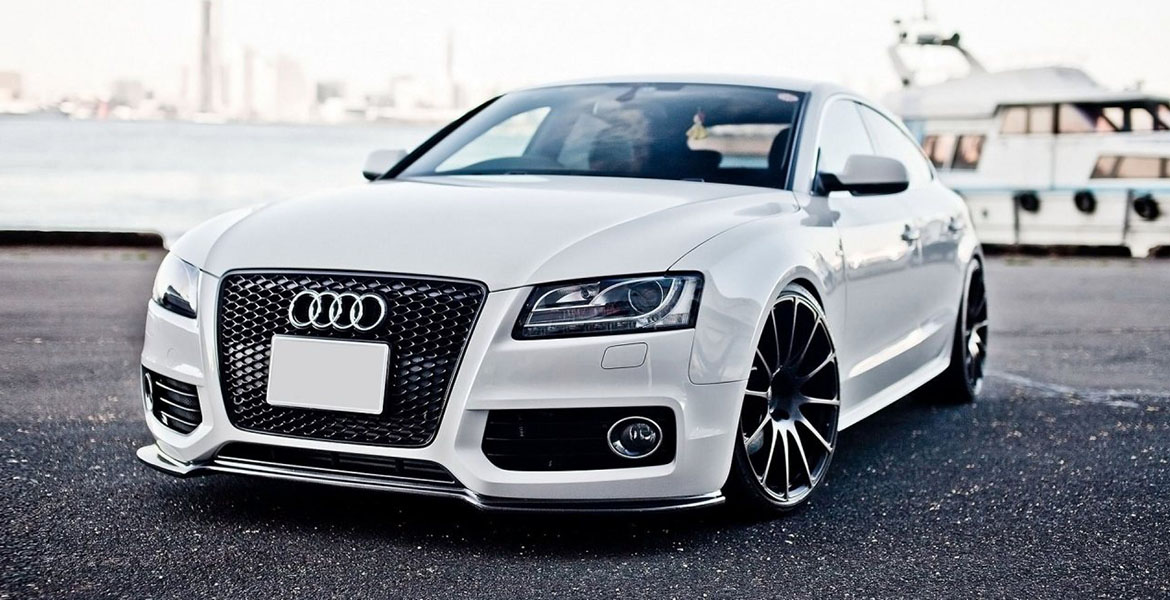
Below we highlight important features for you to consider when purchasing a sports car.
Engines and Fuel Economy
The powertrain (the combination of engine and transmission) is a major consideration with sporty cars, as power delivery is a big part of the fun-to-drive equation. Remember, however, that a sports car need not have a big engine to produce big fun: A small, light sports car such as the Ford Focus ST can provide similar acceleration from a modestly-sized engine as a larger, heavier car with a big V8. Cars with smaller engines often offer better handling, as there is less weight over the front wheels.
Enthusiasts often prefer a manual transmission, because a stick shift gives the driver more control and involvement. But modern-day automatic transmissions have become more engaging, often with "sport" modes, the provision manual gear selection via the shifter or paddles, and more aggressive shifting under heavy acceleration. Some sports cars use a type of automatic transmission called a dual-clutch, which uses internals similar to a manual transmission and provides the same directly-connected feel. Sports cars with dual-clutch transmissions are usually faster and often more fuel efficient than those with manuals thanks to their ability to provide near-instant gear changes. These transmissions usually accelerate the engine to the proper speed during downshifts, eliminating sudden fore/aft weight transfer which can cause a loss of traction. Audi, Porsche, and Volkswagen make extensive use of dual-clutch transmissions in their sports cars.
Many sports cars have a high-revving engine that may get a horsepower boost from a turbocharger or supercharger that forces more air into the engine than a "naturally aspirated" engine can draw in by itself. The more air that's available to mix with the fuel, the more power the engine can produce. Four- and six-cylinder force-fed engines are proliferating, offering a balance of thrilling power and better fuel economy when power demands are low. Even the Ford Mustang is available (again) with a turbo Four.
Larger sports cars and sports sedans usually offer a six-cylinder engine, either a V6 or the smoother-running inline (straight) six. On the whole, six-cylinder engines have a larger displacement (cylinder volume) than four-cylinder engines, so it's easier for the automaker to endow them with more horsepower and more especially torque. While sixes are bigger and heavier, they are also inherently smoother-running than four-cylinder engines.
The largest sporty cars and American-style muscle cars, such as the Chevrolet Camaro, Dodge Challenger, and Ford Mustang, are offered with big-displacement, high-horsepower V8 engines. Acceleration tends to be effortless, and a brutally quick launch from a standing start goes with the territory, as does a very high top speed. Historically known more for cruising and straight-line thrills, modern-day muscle cars have seen ride, handling, and even fuel economy improvements. Keep in mind, however, that having more power doesn't mean it can be put to use. Challenger and Charger SRT Hellcat models use a supercharged V8 that puts out a staggering 707 horsepower, but it's nearly impossible to floor the accelerator at low speeds without breaking the tires loose.
Handling
Beyond the power delivery and sound qualities, a key to a fun car is its handling: how it reacts to the road and the driver. Minimal body lean, quick steering response, and communicative steering feedback are the ingredients that separate poseurs from real sports cars. These qualities cannot be taken for granted and have nothing to do with style, number of doors, or engine size. It takes more than a simple test drive around the block to assess if the handling meets your expectations.
Drive Wheels
Conventional wisdom says that the best sporty cars must have rear-wheel drive. There is some logic to this; rear-wheel-drive cars tend to have better weight distribution and superior directional response. A powerful rear-drive car can be finessed in the turns using the throttle, enabling a skilled driver to rotate the back end of the car in a controlled, and entertaining, fashion.
Front-wheel drive has its limitations in a sporty car; when accelerating out of a corner, front-wheel-drive cars tend to shift weight off the inside front wheel, causing it to spin. This tendency can be controlled by a mechanical limited-slip differential (though some use electronic systems). Despite the limitations, there are plenty of front-wheel-drive sporty cars that are good fun to drive, such as the Mini Cooper S and Volkswagen GTI. Keep in mind that the distinction between front- and rear-wheel drive is minimal during mild driving.
Many sporty cars, such as the Audi S4, Buick Regal GS, and Subaru Impreza WRX, are configured with all-wheel drive. These cars offer superior traction to front- and rear-drive cars, and in spirited driving on curvy roads, their grip on the road is impressive. They have the added bonus of providing better traction in adverse weather conditions, though this also depends largely on the type of tires fitted.
Access
Low-slung sports cars, especially roadsters, can be challenging to enter and exit. Low, heavily bolstered seats, short doors, and arched rooflines favor youthful, athletic drivers. It can be a challenge to access the rear seat, if there is one. Some models have a convenient one-hand-operation for scooting the front seats far forward. With all body styles, consider access issues. Generally, sedans are more accommodating, but even then roof design, door size, and seat can still bring compromises over a traditional family sedan. The trunk may be very small, too. Some hatchbacks have a high lift-over lip and the space may be compromised with a side-to-side brace added for rigidity.
Tires
Some sporty cars come with ultra-high-performance summer tires instead of the all-season tires found on most cars. These tires dramatically increase a car's grip and handling response on both wet and dry roads. As their name implies, they aren't designed for winter use, and they provide little traction on snow and ice. These tires also wear quickly and can be expensive to replace. That said, these tires will allow you to extract the best possible handling and grip from your sporty car. If your car comes with all-seasons, a set of good-quality summer tires is a (relatively) inexpensive way to improve your car's handling even further.
If your car does come with summer tires, and if you plan to drive when the weather gets cold, you will need a set of winter tires (or, at the very least, all-seasons) to install when the weather gets cold. (Winter tires aren't just about snow; along with a more aggressive tread pattern, they use different rubber compounds that stay pliable in cold weather.) The good news is that performance-oriented winter tires are also available. Many manufacturers now offer high-performance all-season tires that approach the performance of summer tires while providing year-round traction.
Safety Features
Some sports cars beg to be driven fast, but as speeds increase, the severity of any crash rises exponentially. Consequently, it makes sense to take all possible precautions to protect yourself and your passengers, and to practice good judgment and restraint. Just in case, it is important to have good brakes, and braking performance is one of the measurements we take on every car we test. Antilock brakes (ABS) and electronic stability control (ESC) are standard on all new cars. To further elevate safety, consider advanced safety features that can help increase situational awareness and even avoid accidents. Outward visibility in most sports cars is compromised, making features like blind-spot monitoring and a rearview camera particularly welcomed. Of course, be sure to confer with available crash-test results.
All new cars also have standard left and right front airbags, and lap-and-shoulder belts. Chest-level side airbags are common for front-seat passengers. Head-protecting side airbags, usually in the form of a side curtain that covers front and rear side windows, are common and we recommend them. Many cars offer knee airbags for one or both front passengers, protecting legs against injury from sharp bits underneath the dashboard.
It can be very difficult to install a child seat in the rear of a sporty coupe or convertible, and even sport sedans have present challenges due to the seat shape. (Check our road tests for an assessment of child seat compatibility.)
Size is another safety consideration. Other things being equal, a larger, heavier car is safer for its occupants than a smaller, lighter car. Check our safety Ratings for insights on how models perform based on crash tests and our dynamic track tests. Bear in mind that because some sports models are low-volume specialty cars, there may not be crash test results available. (Learn more about car safety.)
Advanced Safety Technologies
The latest automotive safety advances include telematics systems that alert emergency personnel if an air bag deploys, lane-departure warning systems that sound an alert if you change lanes without signaling, rearview cameras to prevent back-over accidents, and blind-spot warning systems that indicate when hard-to-see vehicles are driving to the side and rear of you. Automatic-braking systems are also spreading. These collision-avoidance systems apply the brakes if you're approaching the car ahead too quickly and ignore an audible warning that sounds to alert you to the situation. Another advanced technology is lane-keeping assist, which centers your car in the lane if you start to drift. Often, all these features can be had in a single options package.
Entertainment and Convenience
The latest mobile electronics enable cars to deliver the fidelity of home theater, along with Bluetooth smartphone connectivity and navigation guidance. Factory-supplied systems usually offer voice-activated controls for audio, phone, and navigation with various levels of sophistication. You'll frequently find redundant audio controls on the steering wheel.
Audio System
The standard car-audio package is a stereo radio tuner and in-dash CD player with speakers left and right and fore and aft, though some automakers are now abandoning the CD player in favor of an auxiliary input jack. An upgraded system typically has a more-powerful amplifier (so you can play music loud with minimum distortion), along with more and better-quality speakers to enhance clarity and sound separation. Top-level systems add digital sound fields, noise-canceling, surround sound, and DVD-Audio playback.
Cars at every price level have a USB port for connecting a smartphone or iPod and for charging mobile devices, though some high-end European models have proprietary adapters that require a dealer-supplied plug to connect your device.
Satellite and HD Radio
Subscription-based satellite radio (SiriusXM) offers a broad selection of channels with catering to a variety of musical and information interests, with uninterrupted service from coast to coast. Subscription packages range from $11 to $20 per month, and you can add service for your smartphone, computer, and home satellite radio for an additional fee.
HD Radio allows conventional (aka terrestrial) AM and FM stations to broadcast their content over digital signals with higher fidelity. It also allows stations to add more programming over several additional sub-channels that can be broadcast alongside a station's main frequency. This function can be used for delivering traffic updates, weather information, or more diverse music content.
Navigation Systems and Connectivity
In-car navigation systems are a great feature if you often drive in unfamiliar territory. They typically retail for $750 to $1,500 when offered alone, but nav systems are often bundled with other features, such as a backup camera or a high-end audio system, that can add another $1,000 or more. Built-in systems have large, clear screens mounted in the center of the dashboard and have generally intuitive controls. They are integrated nicely into the car, and most systems use touch-screen displays that make it easy to enter destinations and scroll through menus.
Most respond to voice commands, giving you the added safety of keeping your eyes on the road and hands on the wheel. For a subscription fee, many systems can provide real-time traffic reports, which can alert you to congested traffic, accidents, or road construction. But portable dashtop GPS units can offer most of the same capabilities for far less money. (See Ratings and learn more about portable GPS navigation systems.)
Bluetooth connectivity is now ubiquitous, enabling devices such as smartphones to wirelessly communicate with the car's audio system. This allows convenient hands-free phone operation, as well as playback of music stored on the phone. Many infotainment systems can stream Internet-sourced audio to the car using apps, such as Pandora and Aha. Apple Car Play and Android Auto are in an increasing number of new cars, allowing cell phone apps to provide a wide range of infotainment features in-car, such as Google Maps, Skype, and iHeart Radio.
Telematics systems, popularized by GM's OnStar, use a combination of cellular telephone and Global Positioning System (GPS) technology to connect drivers with a call center staffed 24 hours a day, seven days a week, at the touch of a button. For a monthly or annual fee, such concierge services can provide directions and other travel aids. They also have an SOS feature that automatically calls to check on the car after an accident. If need be, these systems can summon emergency services, using the car's built-in GPS receiver to give first responders your car's location.